For centuries, our ancestors didn’t use spices only for taste — they used them as a way to live in harmony with nature. Every season brought different weather, different crops, and different needs for the body. Instead of following complicated diets, people adjusted their meals with seasonal spices that naturally supported digestion, immunity, energy, and overall health.

Long before packaged supplements and modern wellness trends, kitchens were the original healing spaces. Grandmothers knew exactly when to add warming spices like ginger and black pepper, and when cooling ingredients like fennel and coriander were needed. This wisdom was deeply connected to Ayurveda, traditional Indian food culture, and local seasonal eating habits.
Today, science is finally catching up to what our ancestors already understood — spices can influence digestion, metabolism, immunity, and even mood. Seasonal eating with spices was not random; it was intentional, practical, and deeply rooted in observing nature.
Let’s explore how our ancestors used spices according to the seasons and why this ancient practice still makes sense today.
Why Seasonal Eating Was Important
Earlier generations lived much closer to nature than we do today. There were no refrigerators storing off-season fruits, no imported vegetables available year-round, and no artificial preservatives extending shelf life. People ate what was naturally available during a specific season.
This naturally created balance.
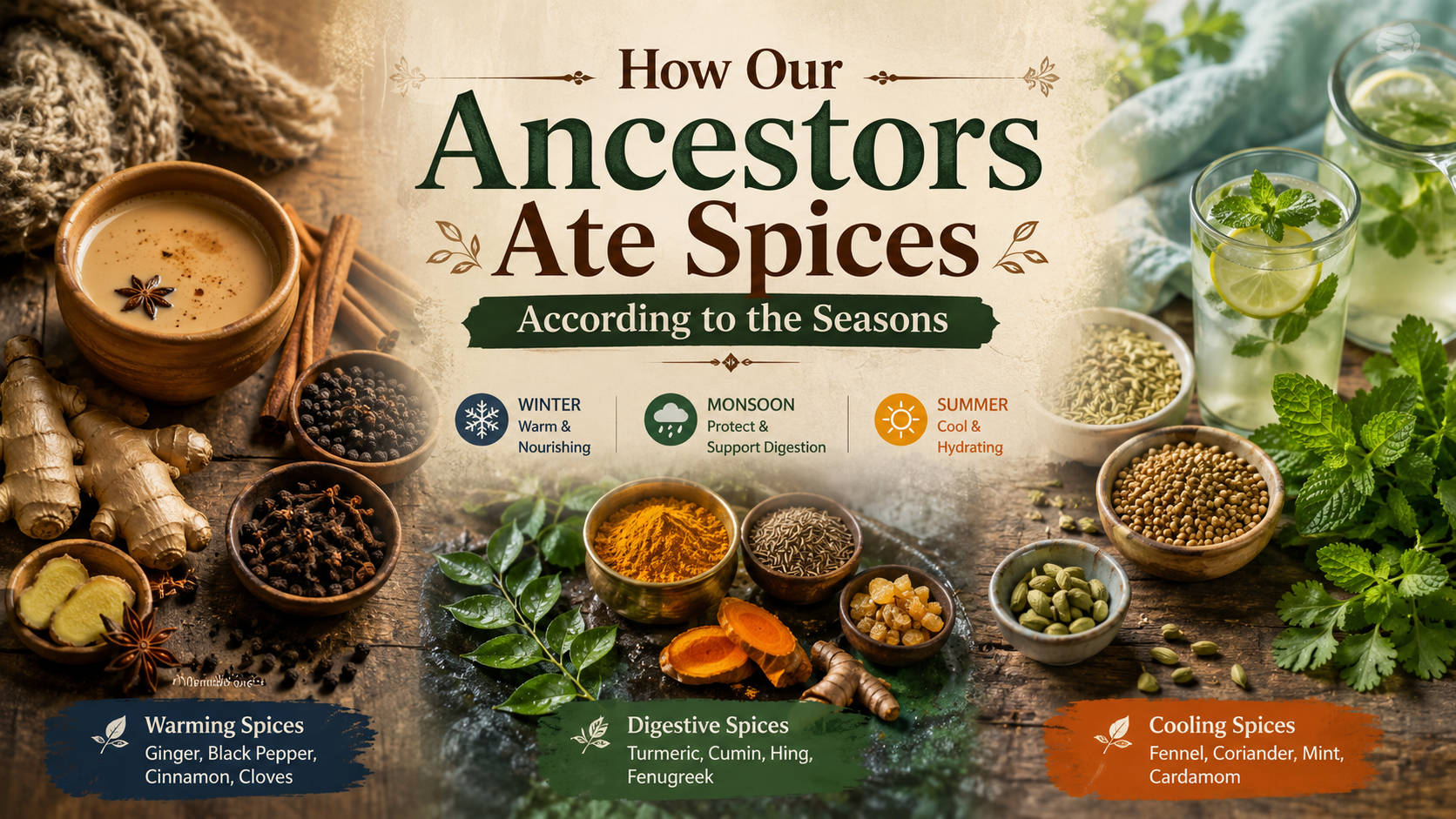
Summer foods were cooling and hydrating. Winter meals were warming and nourishing. Monsoon diets focused on digestion and protection from infections. Seasonal spices became an important part of maintaining this balance.
In traditional Indian households, spices were selected not only for flavor but also for their “heating” or “cooling” effects on the body.
For example:
- Warming spices increased body heat and circulation during cold weather.
- Cooling spices helped the body stay calm and hydrated during heat.
- Digestive spices supported gut health during humid or heavy seasons.
This simple understanding helped families stay healthier throughout the year.
Winter Spices: Warming the Body Naturally
Winter was the season when our ancestors focused on strength, warmth, and immunity. Cold temperatures slowed down circulation and increased the body’s need for energy-rich foods.

This is why winter meals often included warming spices.
1. Ginger
Fresh ginger was one of the most important winter ingredients. It helped warm the body from within, improved circulation, and supported digestion during colder months.
Ginger tea, kadha, soups, and vegetable dishes became common during winter.
Our grandparents often started cold mornings with ginger-infused chai because it helped fight cough, congestion, and seasonal colds.
2. Black Pepper
Black pepper was another essential winter spice. It was added to soups, curries, and herbal drinks because of its warming nature.
It helped:
- Improve digestion
- Clear mucus
- Boost absorption of nutrients
- Support immunity
Even today, many Indian households add black pepper to turmeric milk during winter.
3. Cinnamon
Cinnamon was widely used in winter desserts, teas, and slow-cooked meals. Its warming effect made it ideal for colder weather.
Traditional communities believed cinnamon improved blood circulation and helped maintain body warmth.
4. Cloves
Cloves were especially popular during winter because of their strong antibacterial and warming properties.
People used cloves in:
- Herbal teas
- Rice dishes
- Winter sweets
- Remedies for sore throat
The strong aroma and heat-producing quality made cloves valuable during chilly months.
Summer Spices: Cooling and Hydrating the Body
Unlike winter, summer required cooling foods and lighter meals. Excess heat often caused dehydration, fatigue, acidity, and digestive discomfort.

Our ancestors carefully reduced heavy warming spices and used ingredients that cooled the body naturally.
1. Fennel Seeds
Fennel was one of the most commonly used summer spices. It had a cooling effect and was believed to calm the digestive system.
People consumed fennel:
- After meals
- In summer drinks
- In herbal water infusions
Fennel water helped reduce body heat and supported hydration during hot afternoons.
2. Coriander
Coriander seeds and fresh coriander leaves were heavily used during summer.
Traditional households used coriander because it:
- Helped cool the body
- Supported digestion
- Reduced acidity
- Refreshed the system
Coriander chutneys and coriander-infused drinks were common in many regions.
3. Mint
Mint became a summer essential because of its refreshing and cooling nature.
It was added to:
- Chutneys
- Buttermilk
- Lemon drinks
- Cooling summer meals
Mint also helped reduce nausea and improved digestion during extreme heat.
4. Cardamom
Cardamom was often added to summer drinks and desserts because it provided gentle cooling and freshness.
Traditional drinks like lassi and milk-based beverages often included cardamom for both flavor and digestive support.
Monsoon Spices: Protecting Digestion and Immunity
The monsoon season brought humidity, digestive issues, and a higher risk of infections. During this time, our ancestors focused heavily on gut health.

Foods became lighter, cleaner, and rich in digestive spices.
1. Turmeric
Turmeric played a major role during monsoon months because of its antibacterial and anti-inflammatory qualities.
Families added turmeric to:
- Curries
- Soups
- Milk
- Herbal remedies
Turmeric was believed to help protect the body from seasonal illnesses and infections.
2. Asafoetida (Hing)
Hing was commonly used during monsoon because digestion often became sluggish due to humidity.
It helped:
- Reduce bloating
- Improve digestion
- Prevent gas
- Support gut health
Even simple lentil dishes included hing during rainy months.
3. Fenugreek
Fenugreek seeds were used carefully during monsoon for their digestive and metabolism-supporting properties.
They were added to pickles, curries, and traditional remedies.
4. Cumin
Cumin was another important monsoon spice. It supported digestion and helped the body process heavier foods more efficiently.
Cumin water and roasted cumin powder were commonly consumed after meals.
Seasonal Spice Blends in Traditional Kitchens
One interesting thing about ancestral eating habits was that spices were rarely used alone. Families created seasonal spice blends depending on the weather and body needs.
For example:
Winter Masalas
Often included:
- Ginger
- Black pepper
- Cloves
- Cinnamon
These blends were added to tea, soups, and hearty meals.
Summer Spice Mixes
Usually contained:
- Fennel
- Coriander
- Mint
- Cardamom
These combinations helped cool and refresh the body.
Monsoon Digestive Mixes
Included:
- Hing
- Cumin
- Turmeric
- Fenugreek
These spices supported gut health during humid weather.
This seasonal intelligence made food both delicious and functional.
Ayurveda and Seasonal Spices
Ayurveda strongly emphasized eating according to the seasons, a concept known as “Ritucharya.”
According to Ayurvedic wisdom:
- Winter increases the need for warmth and nourishment.
- Summer requires cooling and hydration.
- Monsoon weakens digestion and immunity.
Spices were chosen based on these seasonal effects.
This wasn’t about restriction. It was about balance.
For example:
- Too many heating spices in summer could increase acidity and discomfort.
- Excess cooling foods in winter could weaken digestion.
- Poor digestion during monsoon could lead to illness.
Our ancestors used spices as natural tools to maintain equilibrium throughout the year.
What Modern Science Says
Modern nutrition research now supports many traditional beliefs about spices.
Studies suggest that:
- Ginger may help reduce inflammation and nausea.
- Turmeric contains curcumin, known for antioxidant properties.
- Cinnamon may help regulate blood sugar levels.
- Fennel may support digestion.
- Black pepper improves nutrient absorption.
Although our ancestors may not have used scientific terms, they clearly understood the practical effects of these ingredients through generations of observation.
Food was their first medicine.
How Modern Lifestyles Have Changed Seasonal Eating
Today, most people eat the same foods throughout the year.
Air conditioning, packaged food, refrigeration, and fast food culture have disconnected us from seasonal eating habits. As a result:
- Digestion issues have increased
- Seasonal immunity has weakened
- Processed foods dominate diets
- Traditional spice knowledge is slowly fading
We often ignore how weather affects the body.
For example:
- Drinking icy beverages during monsoon can weaken digestion.
- Eating overly spicy, oily food during extreme summer heat can increase discomfort.
- Avoiding warming foods during winter may reduce energy levels.
Our ancestors adapted naturally to seasonal changes. Modern lifestyles often resist them.
Bringing Seasonal Spice Wisdom Back Into Daily Life
The good news is that seasonal spice eating is simple to practice even today.
You don’t need complicated rules.
Here are a few easy ways to reconnect with ancestral wisdom:
During Winter
- Add ginger to tea
- Use black pepper in soups
- Include cinnamon in warm drinks
- Consume turmeric milk occasionally
During Summer
- Drink fennel water
- Add mint to meals
- Use coriander generously
- Eat lighter, cooling foods
During Monsoon
- Include cumin and hing in lentils
- Use turmeric regularly
- Avoid excessively heavy foods
- Prioritize warm, freshly cooked meals
Small seasonal changes can make meals feel more balanced and nourishing.
The Wisdom Hidden in Everyday Kitchens
One of the most beautiful things about ancestral food culture is that it was deeply practical. People didn’t separate food and wellness the way modern culture often does.
The kitchen itself was a place of prevention, nourishment, and healing.
Spices were:
- Affordable
- Accessible
- Natural
- Seasonal
- Multi-functional
A single spice could flavor food, support digestion, and help the body adapt to changing weather.
This knowledge wasn’t written in expensive diet books. It was passed through everyday cooking, family traditions, and observation of nature.
Our ancestors understood something powerful: the body changes with the seasons, and food should change too.
Spices were not added randomly. They were carefully chosen to warm, cool, protect, and balance the body throughout the year. Ginger and black pepper strengthened the body in winter, fennel and mint cooled it in summer, while turmeric and cumin supported digestion during monsoon.
In many ways, seasonal spice eating was one of the earliest forms of mindful nutrition.
Today, as people return to traditional wellness practices, this ancient wisdom feels more relevant than ever. By simply paying attention to the seasons and using spices thoughtfully, we can reconnect with a slower, more balanced, and more intuitive way of eating — just like our ancestors once did.