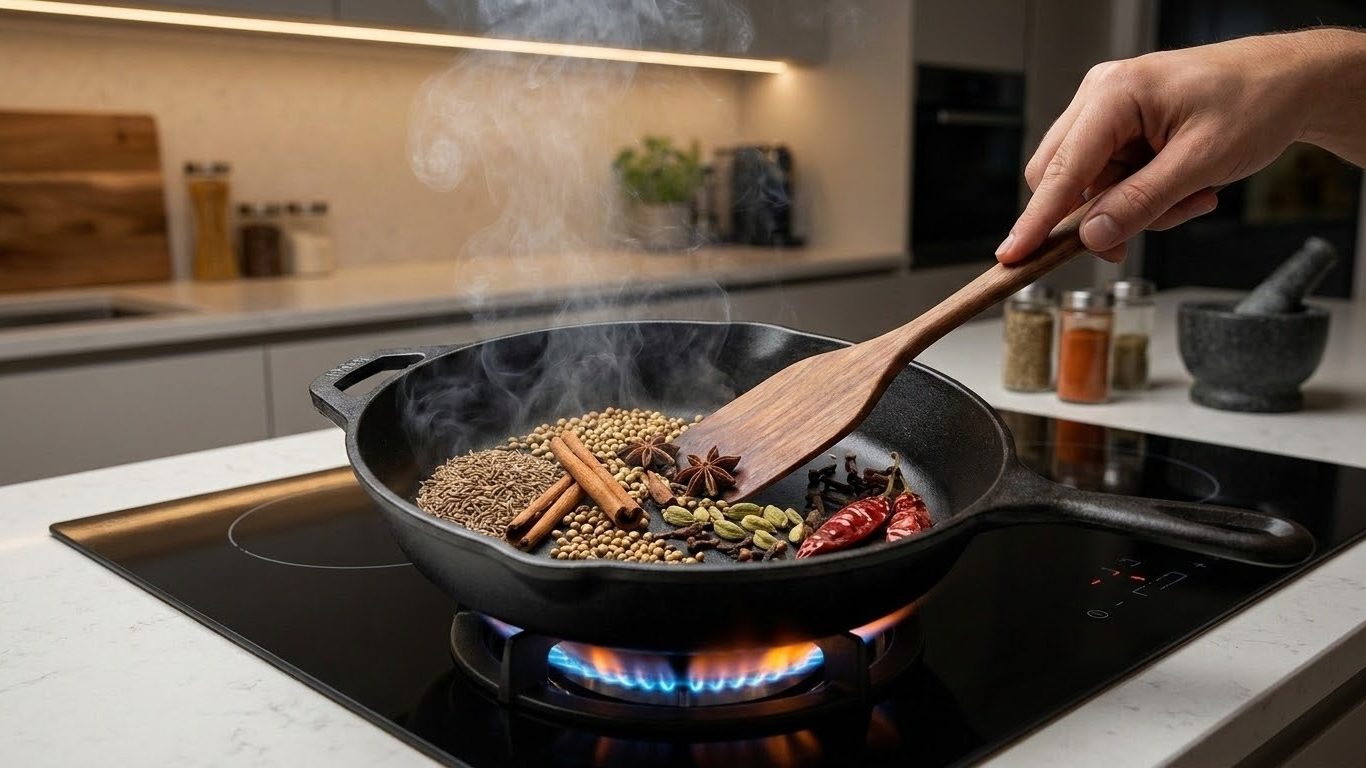
There’s a quiet moment in many Indian kitchens that often goes unnoticed—the gentle roasting of spices on a low flame. No rush, no smoke, no loud crackling. Just a slow release of aroma that fills the air and signals that something good is about to be cooked. It’s a simple step, but one that carries generations of wisdom. Because in traditional cooking, roasting spices was never just about enhancing flavor—it was about preserving what makes them valuable in the first place.
In today’s fast-paced processing methods, this step is often rushed. High heat is used to speed things up, making production more efficient but at a cost. Spices are delicate by nature. They contain essential oils and natural compounds that are responsible not only for their aroma and taste but also for their nutritional value. When exposed to excessive heat, these compounds begin to break down. The result may still look like a spice—but it doesn’t behave like one. The aroma feels weaker, the flavor flatter, and the benefits less effective.
This is where low-heat roasting stands apart. It works with the spice, not against it. By applying gentle heat, it allows the spice to release its natural oils gradually, without damaging them. This slow process helps maintain the integrity of the spice—its structure, its aroma, and most importantly, its nutritional properties. At Trini, this understanding is deeply valued. Inspired by traditional methods, the focus remains on preserving the natural essence of spices rather than altering it through aggressive processing.
When spices are roasted on low heat, something interesting happens. The moisture inside the spice is reduced just enough to make it more stable, but not so much that it loses its life. The essential oils begin to awaken, intensifying the aroma without being burned off. This is why the fragrance of gently roasted spices feels warm and layered, rather than sharp or overpowering. It’s also why these spices blend more seamlessly into food, enhancing the dish without taking over.
From a nutritional perspective, this method makes a significant difference. Many spices are rich in antioxidants and natural compounds that support digestion, immunity, and overall well-being. These compounds are sensitive to temperature. When exposed to high heat, they can degrade quickly, reducing their effectiveness. Low-heat roasting helps protect these compounds, allowing you to retain more of what makes spices beneficial. In a way, it respects the natural strength of the ingredient instead of forcing it to change.
There’s also a balance that low-heat roasting achieves—something that’s difficult to replicate with faster methods. It brings out the depth of the spice without introducing bitterness. Anyone who has accidentally burned spices knows how quickly flavor can turn unpleasant. High heat doesn’t just reduce nutrients—it can also distort taste. Low heat, on the other hand, develops flavor gently, allowing each spice to retain its character while still becoming more expressive.
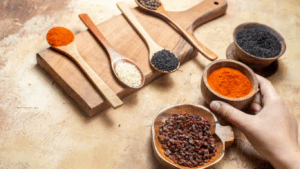
At Trini, this philosophy extends beyond just one step. From sourcing to processing, every stage is approached with care and intention. Spices are not treated as commodities—they are treated as ingredients with history and value. By combining practices like traditional sun-drying with controlled, low-heat processing, Trini ensures that the spices retain both their flavor and their natural benefits. This approach is further strengthened by a commitment to being GMO-free and preservative-free, keeping the final product as close to its original form as possible.
What Makes Low-Heat Roasting So Effective
- It preserves essential oils, which are responsible for aroma and flavor
- It protects nutritional compounds, including antioxidants and natural active elements
- It prevents burning and bitterness, maintaining a balanced taste
- It allows gradual flavor development, creating depth without overpowering
- It retains the natural structure of spices, keeping them closer to their original form
- It enhances digestibility, making spices easier for the body to process
These points may seem technical, but their impact is something you can actually experience. The difference shows up in the way your kitchen smells, the way your food tastes, and even how it feels after eating.
There’s also something deeply reassuring about cooking with spices that have been treated this way. It brings a sense of trust. You know that what you’re adding to your food hasn’t been over-processed or stripped of its natural qualities. It’s still carrying the essence of where it came from. And that makes your cooking feel more grounded, more authentic.
In many ways, low-heat roasting is a reminder of a larger idea—that good things don’t need to be rushed. Just like spices develop better with gentle heat, food in general benefits from patience. When you slow down the process, you allow flavors to build naturally. You allow ingredients to come into their own. And the end result feels more complete, more satisfying.
This becomes even more important in everyday cooking. Not every meal is elaborate or time-consuming. Most of our meals are simple, made quickly between busy schedules. But even in those moments, the quality of your spices can make a noticeable difference. When they are rich in aroma and full of their natural compounds, even a basic dish can feel elevated.
Over time, you begin to recognize this difference more clearly. You notice how the aroma lingers longer, how the flavors feel more balanced, how the food sits better after eating. These aren’t dramatic changes—but they are meaningful ones. They reflect a shift from cooking that is just functional to cooking that is thoughtful.
And that’s really what traditional methods like low-heat roasting are about. They’re not about complexity—they’re about care. They remind us that every step in the process matters, even the ones we don’t always think about.
In the end, spices are more than just flavor enhancers. They are a bridge between taste and well-being, between tradition and modern life. And when they are processed with respect—through methods like low-heat roasting—they give you something more than just good food. They give you food that feels right.
Because when you preserve what’s natural, you don’t just protect nutrients—you protect the entire experience of cooking and eating.